




HKUST joins forces with Tsinghua University, Nanjing University, and Tianjin University to establish the Chinese University Alliance of Earth System Science

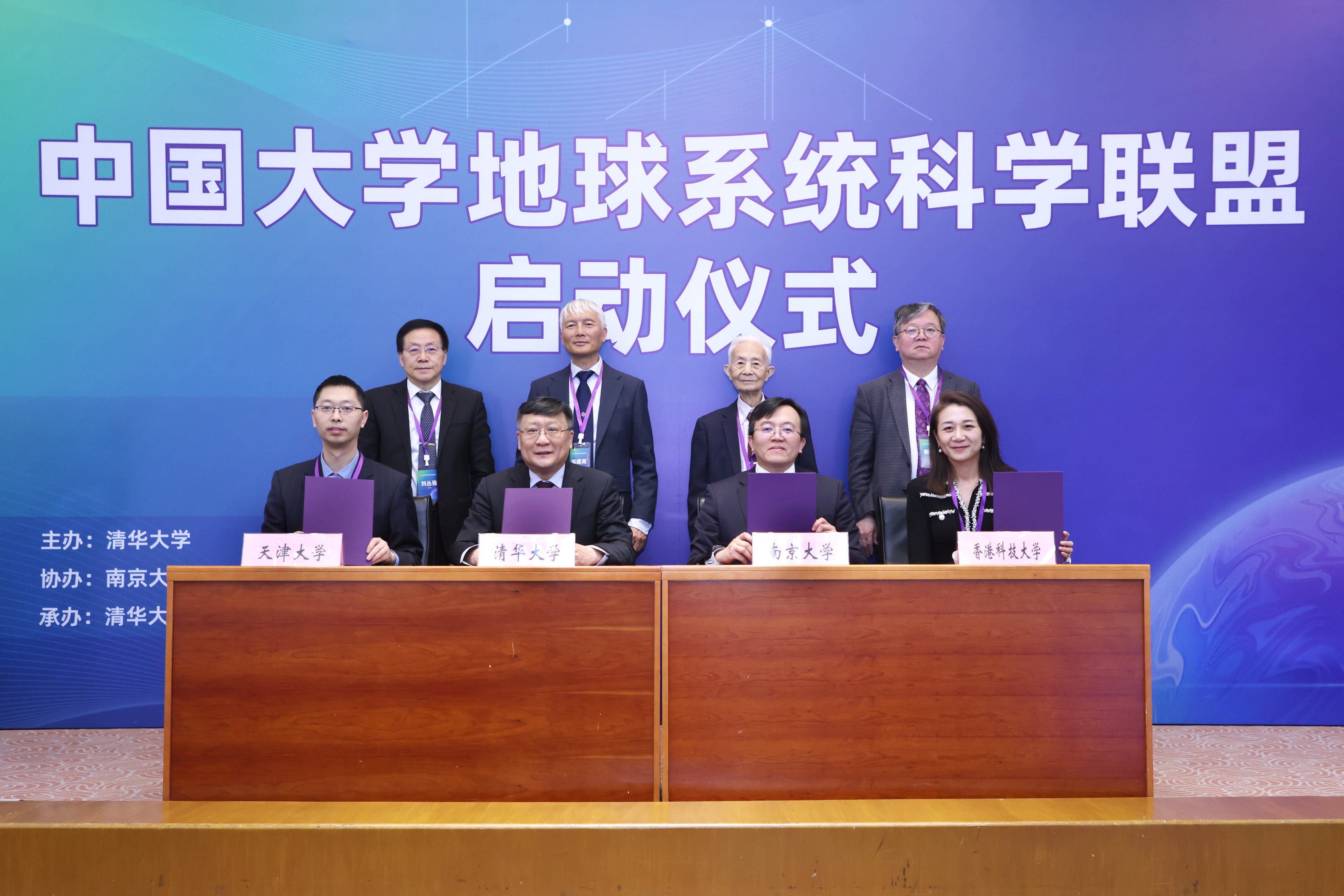
The Chinese University Alliance of Earth System Science (CUAESS) has been jointly established and officially launched by its four founding members: The Hong Kong University of Science and Technology (HKUST), Tsinghua University, Nanjing University, and Tianjin University. The Alliance will focus on cultivating talent in earth system science and fostering the integration of emerging technologies, such as artificial intelligence (AI), big data, and remote sensing, within the field. It aims to build a national research platform to drive technological breakthroughs in critical areas, including climate change response, earth system modelling, ecological protection, and environmental governance, while also deepening international collaboration to enhance the Alliance's global influence.
The cooperation agreement to establish CUAESS was signed by Prof. LU Mengqian, Director of HKUST's Otto Poon Center for Climate Resilience and Sustainability; Prof. LUO Yong, Chair of the Department of Earth System Science at Tsinghua University; Prof. DING Aijun, Assistant to the President and Dean of the School of Atmospheric Sciences at Nanjing University; and Prof. LI Siliang, Associate Dean of the School of Earth System Science at Tianjin University.
The signing ceremony was witnessed by Prof. GUO Yike, Foreign Member of the Chinese Academy of Engineering (CAE) and HKUST Provost; Prof. CHEN Deliang, Foreign Member of the Chinese Academy of Sciences (CAS) and Xinghua Distinguished Chair Professor at Tsinghua University; Prof. FU Congbin, CAS Academician and Director of the Institute for Climate and Global Change Research at Nanjing University; and Prof. LIU Congqiang, CAS Academician and Dean of the School of Earth System Science at Tianjin University. Over a hundred guests attended the event, including representatives from the Ministry of Science and Technology, the Ministry of Ecology and Environment, the Ministry of Emergency Management, the China Meteorological Administration, the National Natural Science Foundation of China, and other universities.
Prof. WU Huaqiang, Vice President of Tsinghua University expressed his hope that the Alliance will become an open platform that serves national strategies, cultivates high-end talent, and leads technology innovation, contributing to the construction of a community with a shared future for mankind. The inaugural CUAESS Chairman, Prof. Chen Deliang, introduced the historical context, mission, and development of the Alliance, emphasizing that it aims not only to reshape talent cultivation but also to provide a continuous reserve of talent and intellectual support for the nation's participation in global governance.
Dr. Hans Joachim SCHELLNHUBER, Director General of the International Institute for Applied Systems Analysis; Dr. Wendy BROADGATE, Director of the Future Earth Global Hub, and Prof. Johan ROCKSTRÖM, Director of the Potsdam Institute for Climate Impact Research, delivered video messages congratulating the establishment of CUAESS and expressing their expectation for further collaboration.
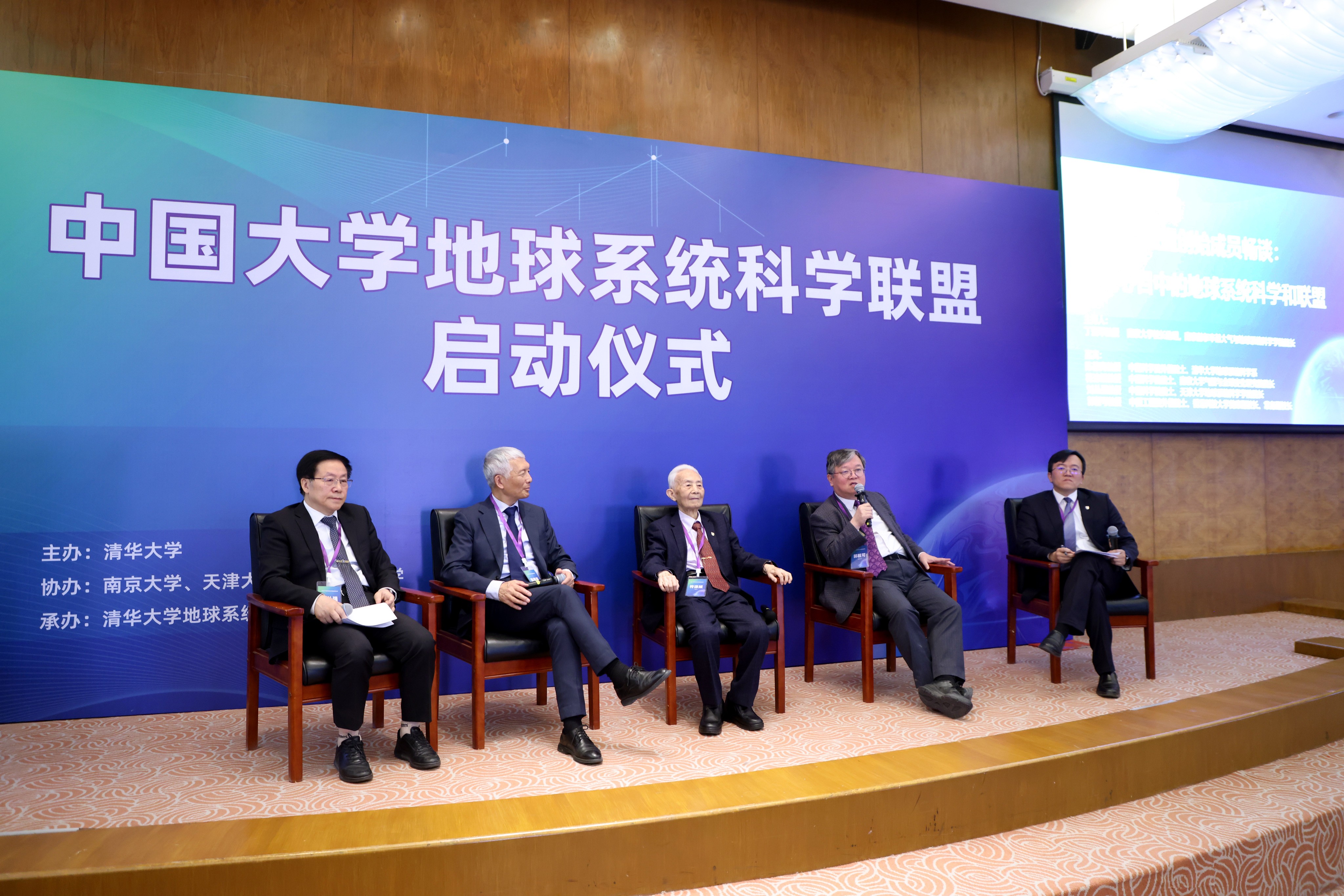
In a panel discussion titled “The Earth System Science and CUAESS in My Mind,” Prof. Guo Yike from HKUST, Prof. Chen Deliang from Tsinghua University, Prof. FU Congbin from Nanjing University, and Prof. Liu Congqiang from Tianjin University shared their insights. Prof. Guo emphasized that earth system science vividly embodies the traditional concept of harmony between nature and humanity within the context of modern science. Looking ahead, he highlighted that AI will profoundly empower earth system science, serving not only as an innovative tool but also as a catalyst for reshaping the research paradigm. He urged for fully utilization of AI to create an intelligent system dedicated to protecting the Earth. By leveraging its strengths, HKUST will serve as an international hub and organize academic conferences to enhance CUAESS’ global influence.
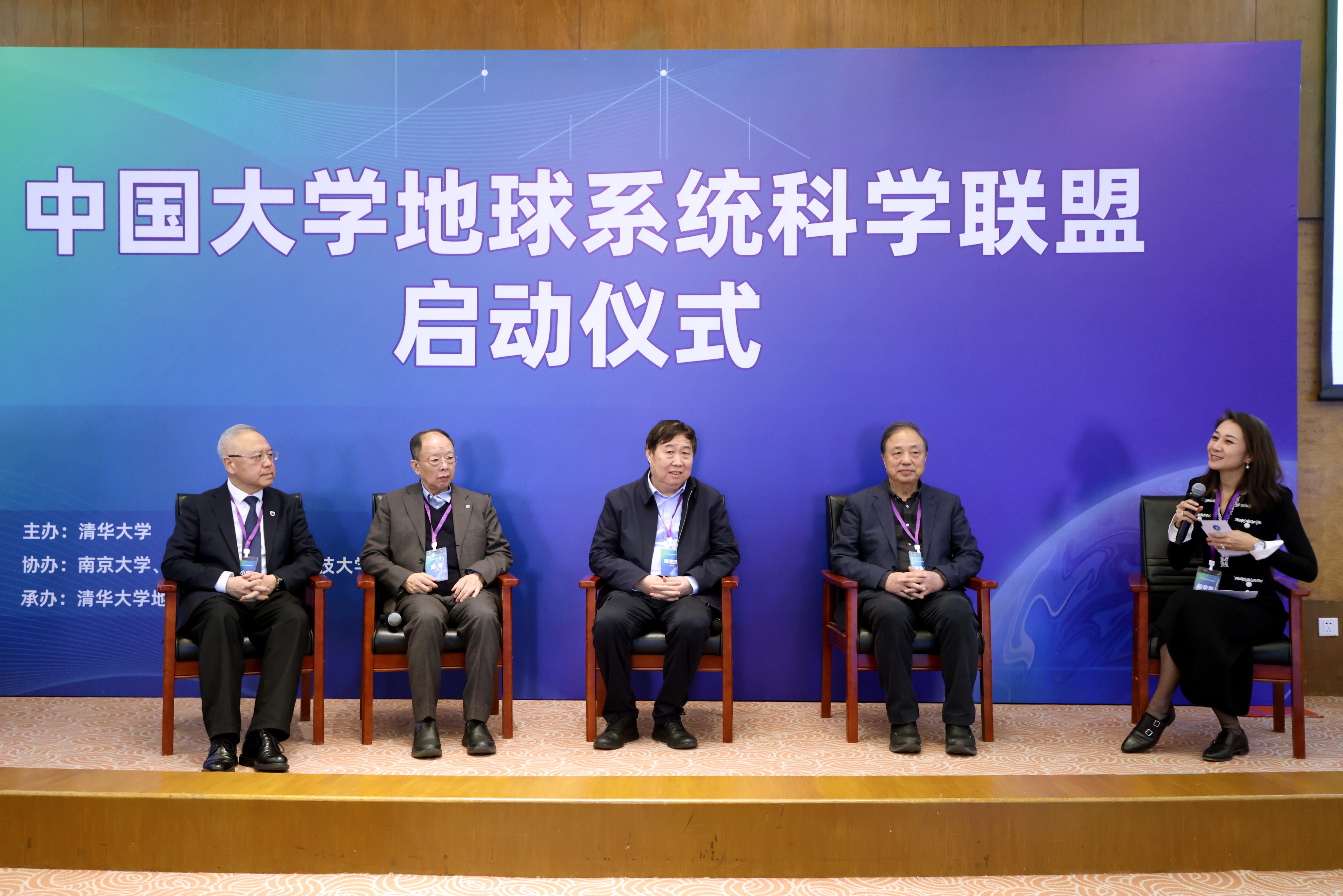
The subsequent dialogue, chaired by Prof. Lu Mengqian, featured CAS academicians including Prof. QIN Dahe, former Administrator of the China Meteorological Administration; Mr. GUO Huadong, Member of the Aerospace Information Research Institute; Prof. FU Bojie, Professor at the Research Center for Eco-Environmental Sciences; Prof. XIA Jun, Director of the Research Institute for Water Security at Wuhan University; Prof. HUANG Jianping, Professor at the College of Atmospheric Sciences of Lanzhou University. Mr. ZHANG Xiaoye, CAE Academician and researcher at the Chinese Academy of Meteorological Sciences, also participated. They shared forward looking insights on “Opportunities and Challenges in Earth System Science.”
During the discussion, experts highlighted China's research strengths in the cryosphere, the empowering role of digital earth in earth system science, and the significance of the water cycle as a vital link connecting multiple spheres of the Earth. They emphasized the importance of attracting young talents to the Alliance and advocated for key measures to overcome the current bottlenecks, including promoting innovation in observational technology, enhancing the integration of AI and high-performance computing, and strengthening interdisciplinary collaboration.
Prof. Lu Mengqian stated that the Otto Poon Center for Climate Resilience and Sustainability (the Center) is exploring interdisciplinary integration across fields such as finance, humanities, atmospheric science, and hydrology. The goal is to establish a comprehensive research framework that connects earth system science with social and economic systems.
CUAESS aims to nurture young scientists with a global perspective, broad knowledge, and innovative capabilities. This approach is designed to achieve the goal of "interdisciplinary integration, talent aggregation, and outcome synthesis," thereby injecting significant momentum into the advancement of earth system science. The Center will actively promote global cooperation and participation within the Alliance, further solidifying HKUST's international leadership in climate research.
During the exchange session, experts and scholars from Peking University, Fudan University, Zhejiang University, and Beijing Normal University discussed the role of universities in advancing earth system science and provided valuable insights for the future development of the Alliance.
Sign Up for Our Latest News
Latest News

A research team from The Hong Kong University of Science and Technology (HKUST), in collaboration with Arizona State University (ASU) and The Hong Kong Polytechnic University (PolyU), has developed a sustainable integrated seawater-to-hydrogen system that can produce hydrogen directly from seawater while converting waste heat from electrolysis into a resource for producing the purified water required for hydrogen production. By integrating hydrogen pr

The Center for Technology and Business Ecosystem (CTBE) of the School of Business and Management at The Hong Kong University of Science and Technology (HKUST Business School), HKUST Shanghai Alumni Chapter, and Tencent Research Institute have successfully concluded the “NOVA: National AI Creativity Competition”.

In the 35 years since HKUST’s establishment, the Cheng family and their Chow Tai Fook Charity Foundation have been steadfast supporters of the University’s development, working closely together on research and innovation.