

News & Stories
2023

2022
News
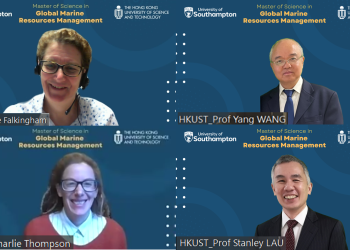
HKUST Strengthens Collaboration with the University of Southampton to Launch Hong Kong’s first Dual Degree Program in Global Marine Resources Management
The Hong Kong University of Science and Technology (HKUST) and the University of Southampton will strengthen their partnership and launch a new Dual Master Program of Science in global marine resources management next year. Offering a multi-cultural and cross-continental learning experience, students admitted to this unique one-year program will spend the first semester in Southampton and the second as well as the summer at HKUST. Students will not just gain knowledge and first-hand experience in marine ecosystems across the two continents, but also get to develop professional network in Hong Kong, Southampton and beyond. They will graduate with qualifications from both universities.

News
HKUST Develops World’s Most Durable Hydrogen Fuel Cell
Researchers at The Hong Kong University of Science and Technology (HKUST) have developed a new hydrogen fuel cell which is not only the world’s most durable1 to date, but is also more cost-effective, paving way for a wider application of green energy in the pursuit of a carbon neutral world.Hydrogen fuel cell is a promising clean energy option as it generates power by converting hydrogen and oxygen into electricity, with zero emission of carbon dioxide, particulate matters and other air pollutants that may cause smog and other health problems. Despite its environmental benefits and years of development, hydrogen fuel cell was still not widely commercialized. That is because its power generation depends heavily on an electrocatalyst - which is largely made up of the expensive and rare metal platinum.